
The IND vs NZ 1st T20I Records from Nagpur present one of the most thrilling statistical stories in recent T20 international history. This match was not just about winning or losing; it was about breaking limits, redefining power-hitting, and showcasing how fast the shortest format is evolving. From explosive powerplay dominance to brutal death-overs finishing and remarkable bowling consistency, the IND vs NZ 1st T20I Records reflect a complete transformation of T20 strategy.
Below is a detailed, record-by-record breakdown, with each section explained in depth to highlight why these milestones matter in the global T20 landscape.
Most T20I Sixes in the First 6 Overs Since Abhishek Sharma’s Debut
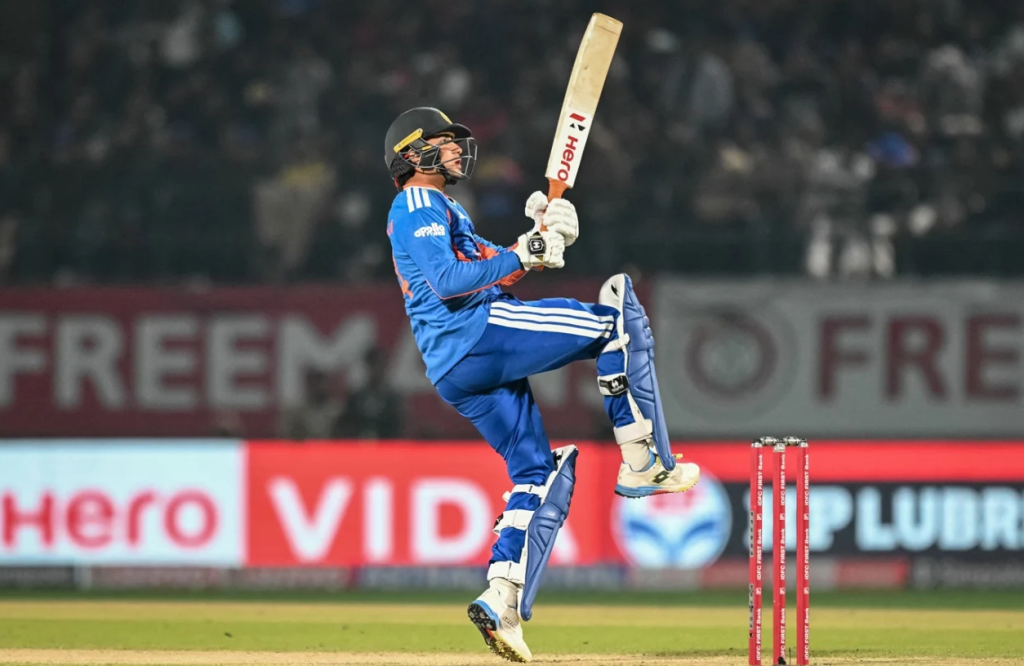
The powerplay phase has become the most decisive segment in modern T20 cricket, and this record perfectly captures that shift. Since Abhishek Sharma made his T20I debut, no batter in the world has hit more sixes in the first six overs than him. His intent from ball one puts bowlers under immediate pressure, often forcing captains to abandon defensive fields early in the innings.
What makes this record extraordinary is not just the number of sixes but the frequency. Abhishek Sharma strikes a six every 8.6 balls during the powerplay, a rate that completely disrupts bowling plans. Compared to traditional openers who focused on strike rotation, this new-age approach maximizes run flow when fielding restrictions are in place. The IND vs NZ 1st T20I Records underline how India’s batting philosophy now revolves around dominance rather than consolidation.
| Player | Sixes | Balls per Six |
|---|---|---|
| Abhishek Sharma | 49 | 8.6 |
| Sahibzada Farhan | 28 | 15.0 |
| Brian Bennett | 25 | 21.4 |
| Shai Hope | 24 | 11.7 |
Reaching 50 in 25 Balls or Fewer – Most Times in T20Is
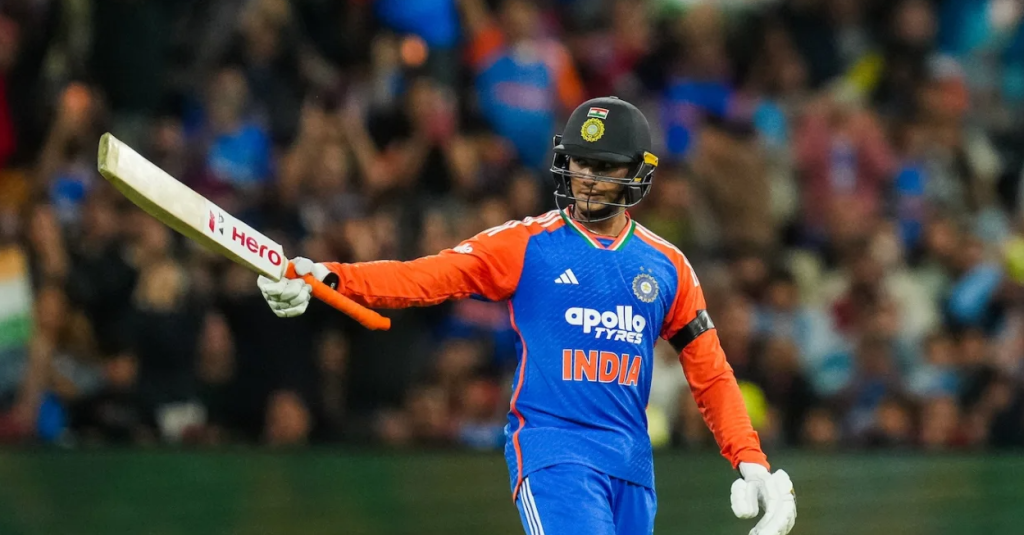
Fast half-centuries are momentum-shifters, and this record proves how elite batters turn starts into match-winning advantages. Abhishek Sharma’s name alongside established T20 stars like Suryakumar Yadav and Phil Salt highlights his growing impact at international level. Achieving a fifty in 25 balls or fewer requires perfect balance—clean striking, shot selection, and the courage to attack even quality bowlers.
In the context of the IND vs NZ 1st T20I Records, this milestone shows how India’s top order no longer plays cautiously against strong bowling attacks. Instead, the focus is on scoring quickly and building scoreboard pressure. These rapid fifties often force opponents into panic bowling changes, which then opens the door for even bigger totals.
| Player | Times Reached 50 in ≤25 Balls |
|---|---|
| Abhishek Sharma | 8 |
| Phil Salt | 7 |
| Suryakumar Yadav | 7 |
| Evin Lewis | 7 |
Most Sixes in a T20I Innings vs New Zealand
Hitting sixes against New Zealand has never been easy, given their disciplined bowling and sharp fielding. That is why this record carries special weight. Abhishek Sharma’s eight sixes in Nagpur place him alongside global power-hitters like Kieron Pollard. While Richard Levi still holds the overall record, Abhishek’s knock stands out because it came under intense pressure against a top international attack.
This achievement in the IND vs NZ 1st T20I Records symbolizes India’s fearlessness in home conditions. The ability to clear boundaries consistently against varied bowling styles reflects technical skill and supreme confidence. It also signals that Indian batters are no longer content with competitive totals—they are aiming for dominance.
| Player | Sixes | Venue | Year |
|---|---|---|---|
| Richard Levi | 13 | Hamilton | 2012 |
| Kieron Pollard | 8 | Auckland | 2020 |
| Abhishek Sharma | 8 | Nagpur | 2026 |
Highest T20I Team Totals Against New Zealand
High-scoring matches are becoming more common, but scoring nearly 240 runs against New Zealand remains a rare achievement. India’s 238/7 in Nagpur now ranks among the highest totals ever recorded against NZ in T20Is. This innings showcased deep batting resources, fearless shot-making, and exceptional acceleration in the final overs.
The IND vs NZ 1st T20I Records demonstrate how India has evolved into a team capable of sustaining aggression across all 20 overs. Unlike earlier eras where teams slowed down after losing wickets, this performance showed continuous attacking intent. It sends a strong message to future opponents that no total is out of reach for this Indian lineup.
| Total | Team | Venue | Year |
|---|---|---|---|
| 245/5 | Australia | Auckland | 2018 |
| 241/3 | England | Napier | 2019 |
| 238/7 | India | Nagpur | 2026 |
| 236/4 | England | Christchurch | 2025 |
| 234/4 | India | Ahmedabad | 2023 |
Rinku Singh in Overs 19–20 in T20Is
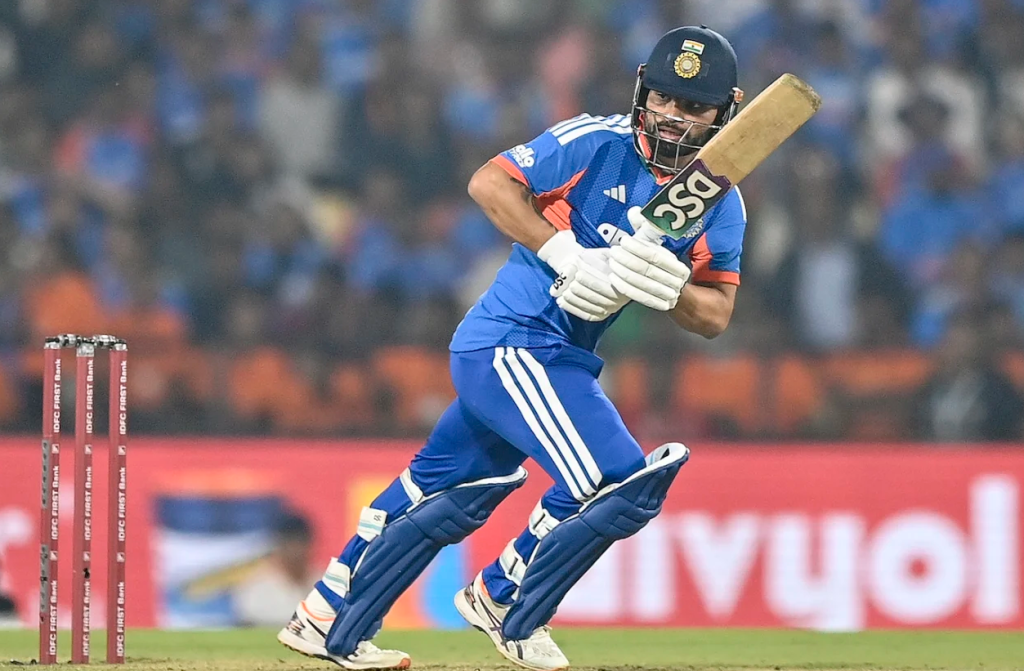
Rinku Singh’s death-overs numbers are among the most frightening in world cricket. Scoring 213 runs from just 74 balls in overs 19 and 20, he operates at a strike rate nearing 288. These are not situational cameos; they are sustained, repeatable performances under pressure.
Within the IND vs NZ 1st T20I Records, Rinku’s contribution highlights India’s finishing strength. His ability to target yorkers, slower balls, and wide lines makes him incredibly difficult to bowl to at the death. Such finishers allow teams to add 30–40 extra runs, often turning close contests into one-sided results.
| Stat | Value |
|---|---|
| Balls Faced | 74 |
| Runs | 213 |
| Strike Rate | 287.83 |
| Fours | 14 |
| Sixes | 22 |
READ MORE:
- India vs New Zealand 1st ODI: Records, Stats & Historic Feats That Lit Up the Series
- IND vs NZ 3rd ODI: Historic Records, Milestones, and a Night That Redefined ODI Cricket
FAQ
Why are the IND vs NZ 1st T20I Records considered historic?
The IND vs NZ 1st T20I Records include rare achievements in powerplay six-hitting, death-overs scoring, and overall team totals against a top international side.
Who dominated the IND vs NZ 1st T20I Records with the bat?
Abhishek Sharma and Rinku Singh were the standout performers, redefining powerplay and death-overs batting.
What makes Abhishek Sharma’s records special?
His ability to hit frequent sixes early and score ultra-fast fifties places him among the elite T20 batters globally.
How significant is India’s total of 238/7 against New Zealand?
It is one of the highest T20I totals ever scored against NZ, showcasing India’s aggressive batting depth.
How do the IND vs NZ 1st T20I Records impact future matches?
These records set new benchmarks, forcing teams to rethink bowling strategies and accept that high totals are now the norm in modern T20 cricket.